And remember - cycle 2 history goes through grades 3 and 4 so you do have 2 years to go through these units if you'd like to slow down or focus on one topic a little longer.
Download the Free History of Quebec Unit!
And remember - cycle 2 history goes through grades 3 and 4 so you do have 2 years to go through these units if you'd like to slow down or focus on one topic a little longer.
Download the Free History of Quebec Unit!
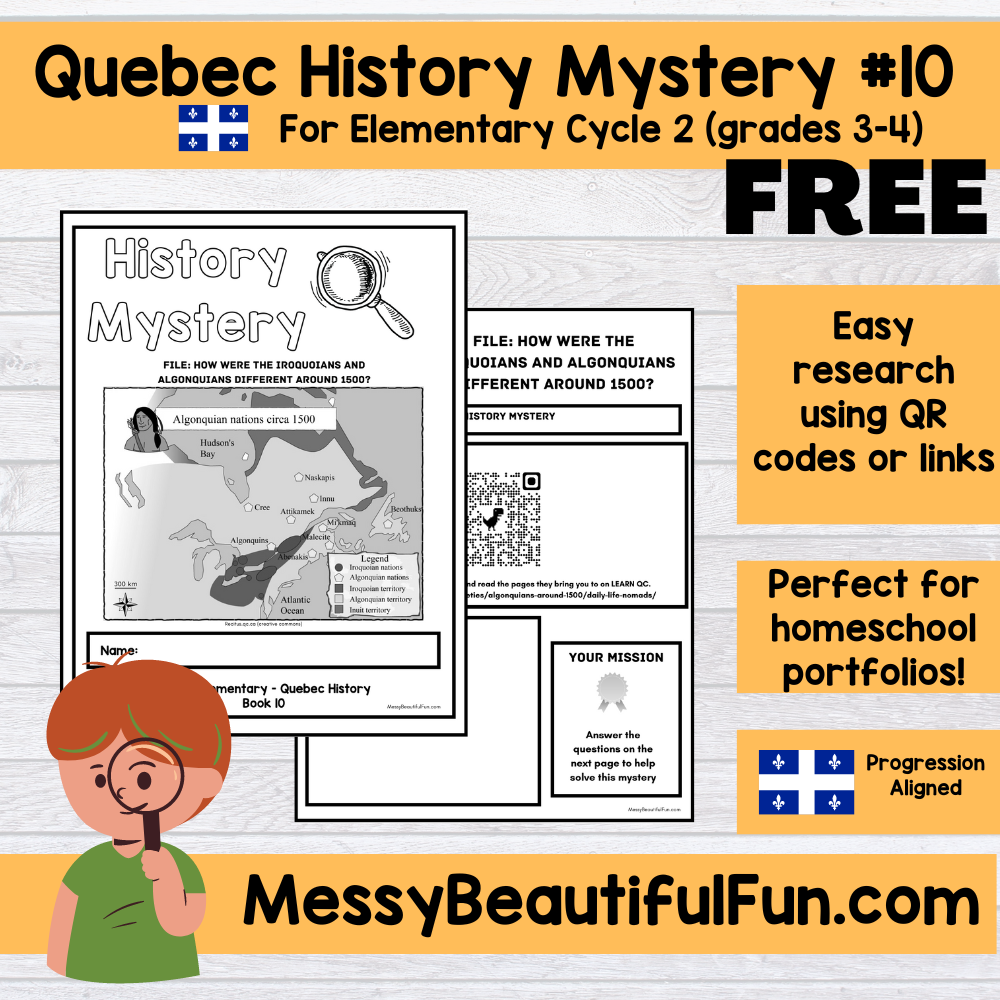
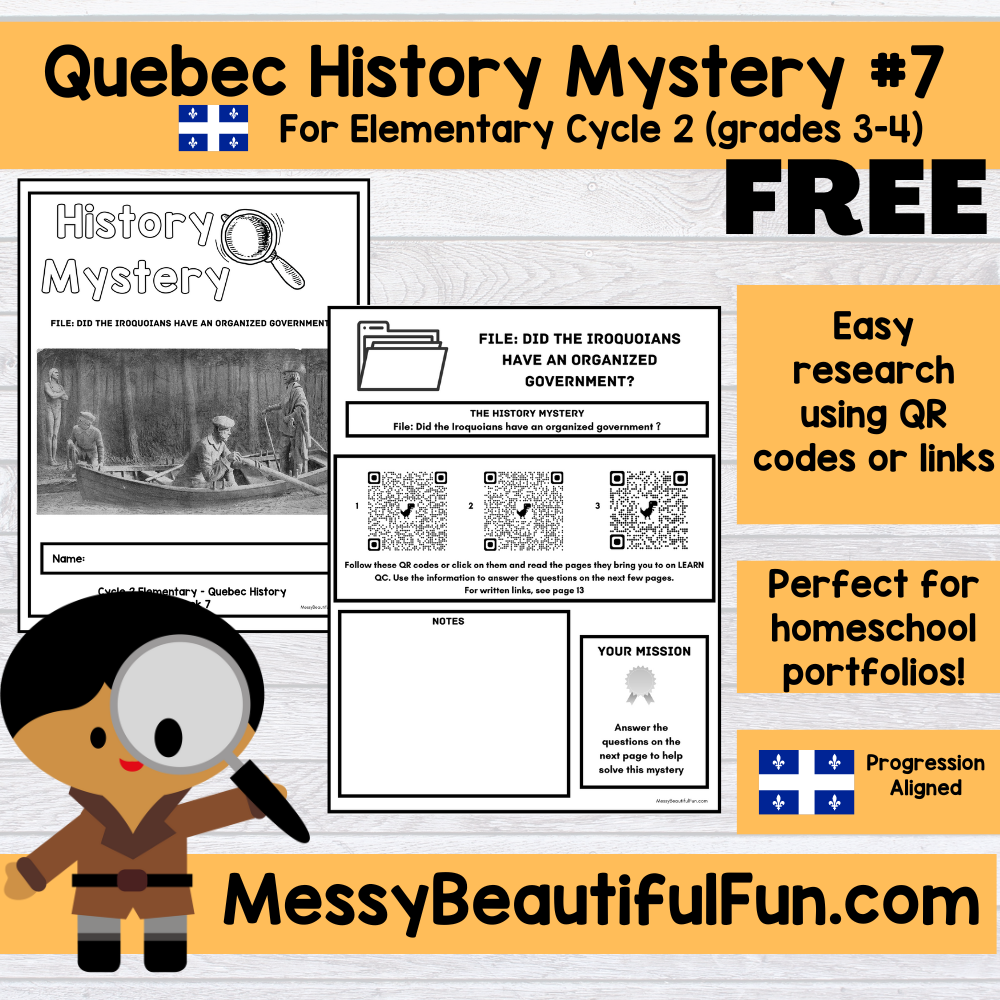
Learners will read a few short paragraphs about how the iroquoian nations organized themselves and their government, how longhouses were organized, and how chiefs and leaders were elected. This covers quite a few progressions in the progressions of learning under the Quebec Education Program.
Next, students will 'solve the mystery' by answering questions on the given worksheets. The questions are simple enough for them to fill out with short answers but show enough learning to be a great portfolio resource.
They often also include diagrams and maps so kids can show off their comprehension and reading skills too!
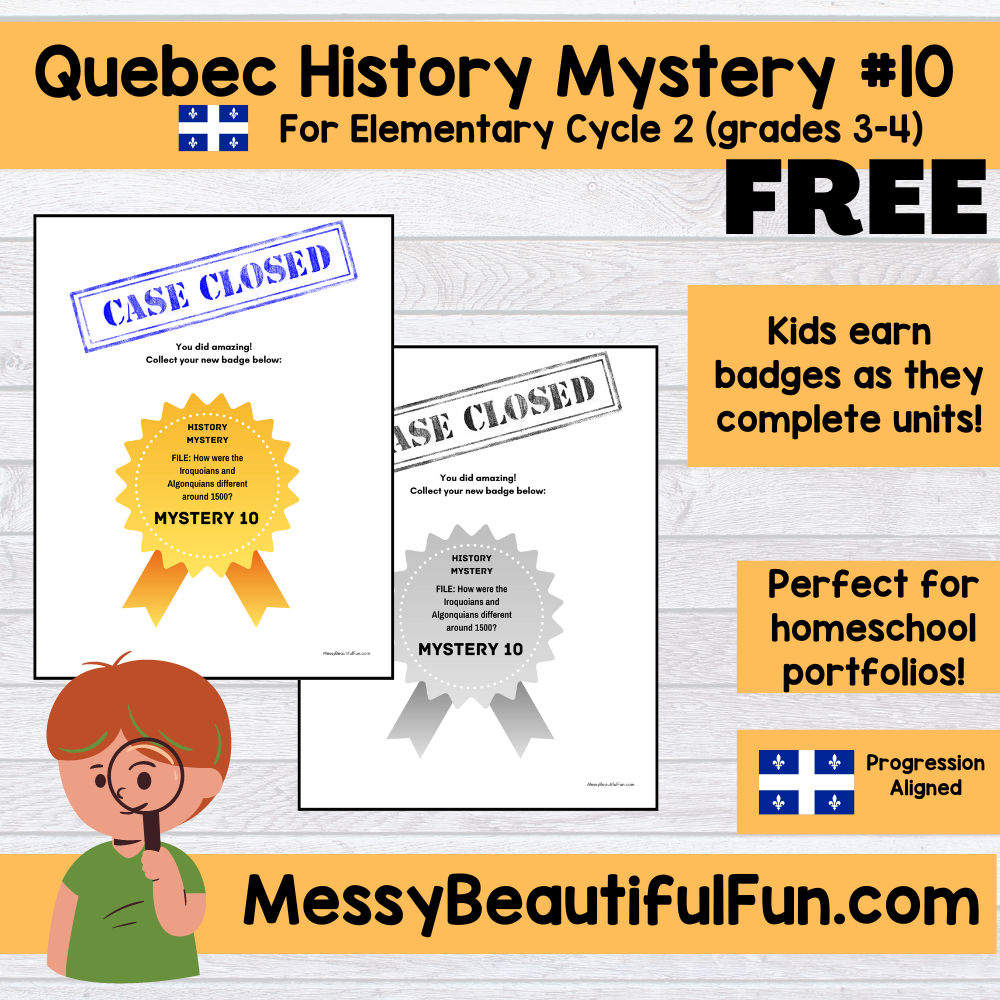
Once they fill out all the worksheets, they can choose to earn a badge! My own kids like to display these on our dining room wall - yours might like to glue them into a notebook, paste them in their room, or just keep them inside their units.
Inside this unit, you'll find a small bonus project! Kids can write a short one-page biography on Donnacona. The questions are simple (who, what, where, when) but this would be a great way to learn about writing a biography (and what it means), and a great sheet for their portfolios.
I have provided two links you can use to read more about Donnacona's story than is given on the Learn QC site. (CBC Education and WIkipedia). You can choose to use other resources too, but sadly not much is known about Donnacona and his life before and in France, so there is really not a lot more information out there.
Just like the other units this one has a few pages of maps and diagrams that can be used to hang on your wall to remember what you've learned or to be used as reference. I always try to give a color and black and white version of each.
I do hope you and your learners enjoy this new unit! Download it below by clicking the link under the image - all I ask is that when sharing this resource, please share the link to this blog or page, NOT the google drive link! Thank you!
Free Quebec History Mystery 6
Animism, Shamans and Oral Tradition
And, of course, like all of the previous units, this one comes with fun badges for kids to put on display on the wall or in a special notebook to show all that they have learned - using these units over 2 years they will earn quite a few!
I do have different plans for another reward system for the older kids in future history units for grades 5-6.😉
Take a peek at the pages after the badge too - I've included a new map and another fun project idea!
This time the project would make a great time in the kitchen cooking, or a nice tea time. It involves reading some Iroquoian myths!
You can download this unit for free by clicking the link under the image below! All I ask is that when sharing this resource to please share the link to this blog, not google drive.
Thank you and enjoy your learning!
Download History Mystery 6 Unit Here
Another freebie writing unit is here!
Want MORE free writing units, or units for other grades? Check my ELA page often!
What could be more fun than writing a fictional story! Kids get to use their imaginations and come up with anything they'd like! Even if you have a reluctant writer, this unit will help them out with some great prompts.
I made this open-and-go unit to be simple for kids to use. You begin by reading about what a fictional narrative is. This is the same explanation given in the unit for cycle 2, but the rest of the unit goes into a lot more detail.
Kids will then either choose a prompt (these are new prompts for grades 5-6) or make up their own prompt to use. Next, they'll learn all about a simple plot line and what it involves - the exposition, rising action, climax, falling action, and resolution. This will guide them in planning their own storyline.
They will also write or map out their setting(s) and make profiles of their characters.
After they have their first draft of their story down they will begin to revise. The first two steps are the same as was given in the cycle 2 unit - adding a great lead and adding dialogue. In this unit, older kids will dive into adding more detail to two parts of their story using vivid descriptions.