Monday, June 20, 2022

Free Science Journal For Grades k-2: Investigating Matter

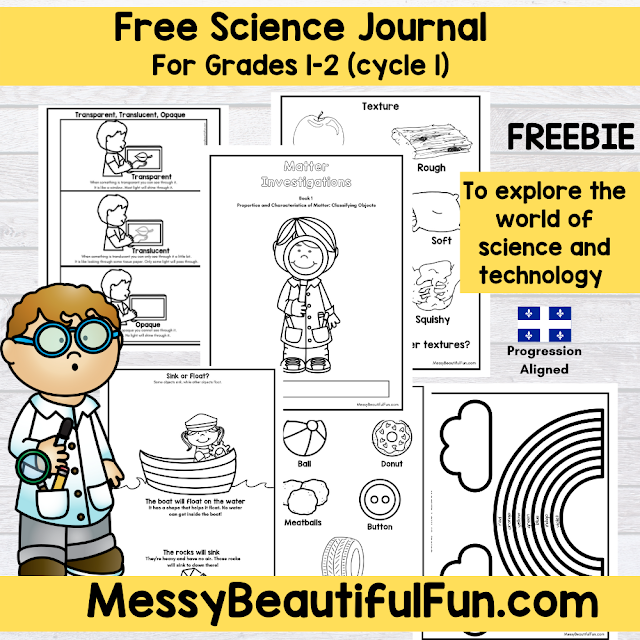
 Free Printable Science Journal for Properties of Matter in Grades K-2


Science! What kid doesn't love a fun experiment, cool project or even video they find online all about their favourite animal. Learning and teaching science can be plenty of fun for both kids and parents, but sometimes proving that your child or student has learned anything can be difficult. How do you bring all of that real-world learning into a homeschool portfolio or proof of learning? You make it as fun as possible!

That is my hope with these printable science journals - this one the first in the series. On my new site, Quebec Homeschool Helps, I have been trying my best to make up a fun and easy way for homeschool parents in my own province to prove their learning. But you don't have to live here to enjoy these printables - they can be used by anyone!


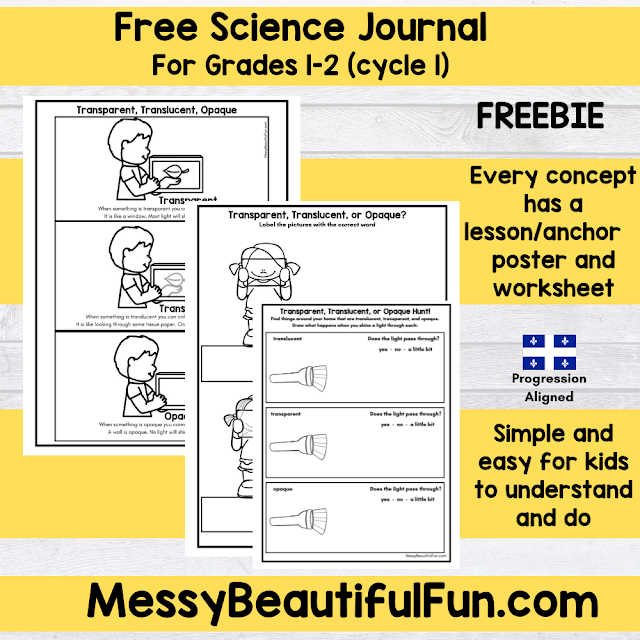
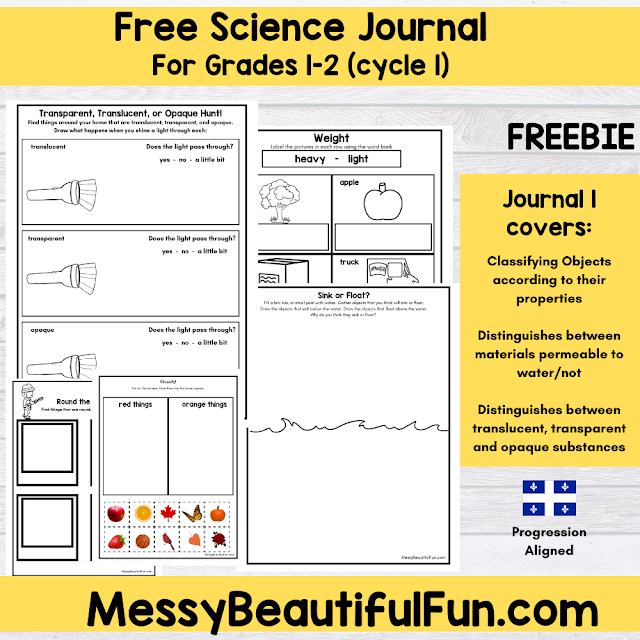
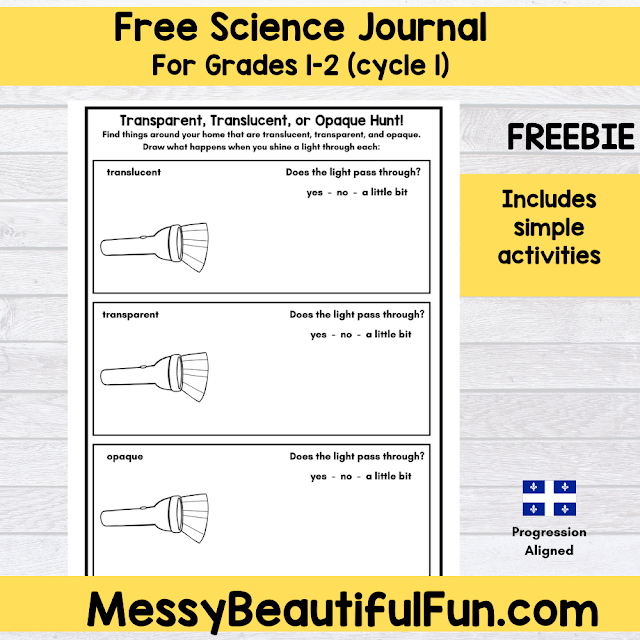
Take the above example from the science journal - learning about translucent, transparent and opaque objects or substances. I have included an anchor chart or poster that is fun and easy to understand. Your child might already know what these three words mean, but proving that in a learning portfolio can be tricky. Here I've included a simple worksheet that allows students to fill in vocabulary words, as well as a simple activity in which they can discover whether objects are translucent, transparent, or opaque using a flashlight.

It's a simple way to show learning in science!


Since these journals will also follow a progression of learning, you could also use them as a base to build your own curriculum! Just fill in the subjects with books from the library and youtube videos!


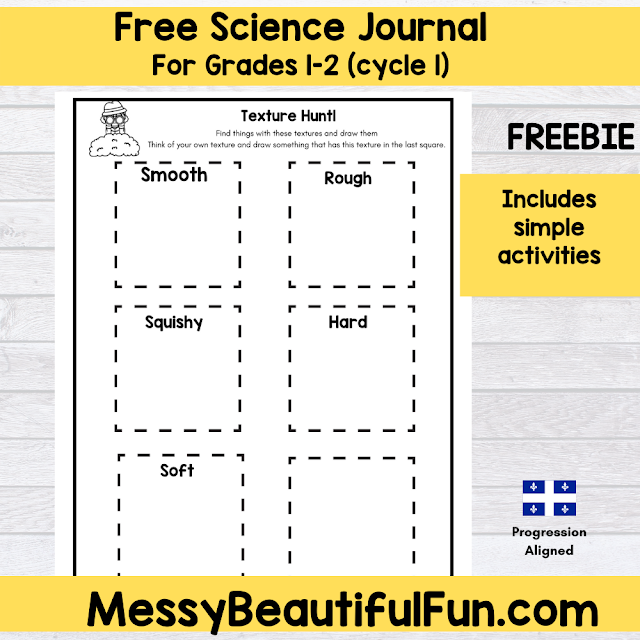
Here is another fun activity found in this journal - a texture hunt. Kids learn about different textures through the included poster. They then go on a texture hunt around their home or outside and find things that have certain textures. There's a blank one for them to fill in too!


I really hope that these can be a help in your home or classroom! I will be using them with my own kids too! More for cycle 1 (what we call grades 1 and 2 here in Quebec) and for grades 3-6 will come out in the coming weeks too!

To download this freebie just scroll down below the picture!
**Please remember that if you'd like to share this freebie, to share this page and not the google link. But please do feel free to make printed copies for your class or friends - just please leave my URL (MessyBeautifulFun.com) on the pages. Thank you so much!**


Looking for more science? Check these out!


Saturday, June 18, 2022

Free Math Journals for Grade 1-2 - Free Math Curriculum Printables


Have you ever tried using a math journal with your learners? 
Math journals are not only a fun addition to math lessons for most kids, but they're also a great way to assess kids learning, and challenge them to think differently about math.

Jen thinks that 6 + 4 = 12. Ryan thinks that 6 + 4 = 10. Who is correct? Show how you know.
Questions like these are included in the journal - I have also included different levels (same question but with 12 + 12 as the equation, for example) for different learners. 

So how to answer a question like that?

That's up to your kids! They show their answer with a drawing, a sentence, maybe a number line. The idea is that kids can show their math skills AND vocabulary AND thinking all in one step.


Here are a few more examples of some questions and how kids might answer them:


Pages like these show which strategies your learners are using most.


Writing their own problems when given a question is a great way to bring a fresh take on problem-solving.


There are similar vocabulary pages for addition and subtraction, as well as comparing.


Some pages ask kids to think outside the box of using numbers only.


Many questions have 2 different levels to cater to different skills.

There are 25 questions in all!

This also means that this journal could be used for two years, especially for homeschooled kiddos.

Grab the free download below

**Please remember to share the link to this blog and not the direct google drive link. Thank you!!**


Download the free Math Journals here!


Want more math? Check out these resources below!


Numbers to 20 Pages

Tuesday, June 14, 2022

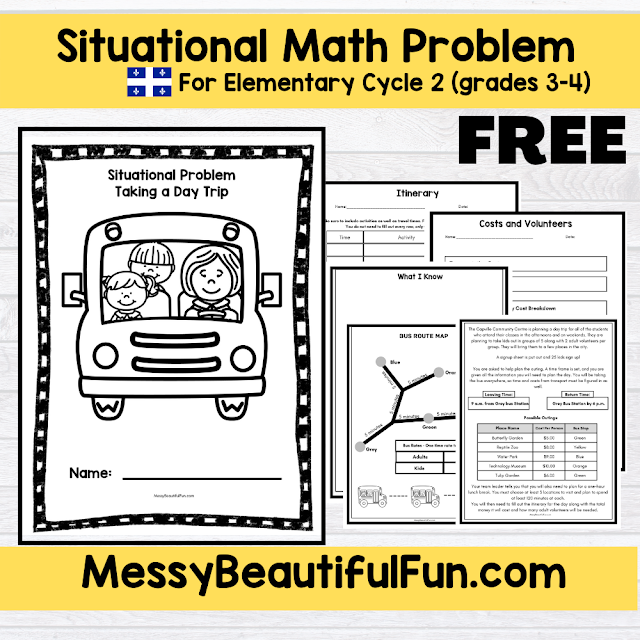
Free Math Curriculum - Day trip - Situational Problem for Grades 3 to 4 (Cycle 2)

 Free Situational Problem in Mathematics


I have another AMAZING freebie for you - another situational math problem!
If you missed the first one I released (which is also free!) you can grab it here!

What is a situational math problem?
Think of a project-based learning situation, except it's written all on one page. Kids need to figure out the pacing, planning, and answers themselves (with some guidance from you, of course!)

Unique to the Quebec Curriculum, situational math problems help students think through real-life scenarios and use a bunch of the math skills they have been learning to figure out a solution. In many of these problems, there is no one correct solution, but a few possibilities. That is the case with this one.

How do we solve a situational problem?
My advice is, if this is your first problem, take it s-l-o-w!
Here is an example of how you might work it out:

Day 1
Spend the first day you work on it reading through the problem and highlighting any important information. 
Next, use the "What I know" sheet to write this information down (this is optional, but really helps!)

Day 2
Today figure out how you will solve the problem. Use the "What I Need to Do" sheet to write down all of the steps you might need to take.  Help your learner(s) figure out what sort of math skills they might need to use, and any tools they might need to have on hand, like manipulatives or a calculator.

Day 3
Today get working on the problem! Take your list of what needs to be done and start.
Help your learner here and let them take breaks when they need to. Remember that this is a lot to work through, especially if it is the first time you're solving a situational problem.

Day 4
Continue working on the problem. If you solved it all yesterday, check it over together.
I have included an "answer sheet" but since there is no right answer, this is really just to guide you, as the teacher, to help your learner(s) figure out what to do.

Day 5
Go over any mistakes together and try to help your learner see why they didn't come out correctly. The point here isn't to stress them out about "wrong answers", but to help them figure out what might have gone wrong. 

Once you solve the problem in full, be sure to give your learner (and yourself!) a good round of applause! That is a LOT of thinking work!

What if it's too difficult?
I suggest trying a lower level. But PLEASE don't feel bad about this or even mention to your child it's a lower level. Just suggest maybe you should start with a simpler problem and work your way up to more difficult ones. Remember, all kids are on different levels of learning, no matter what grade they are in. Situational problems can be really complex and involve a lot of brain power!


You can download this situational problem below for FREE! It's a great math exercise to do with your homeschooled child(ren) or even in a classroom instead of a regular math assessment!

What Skills Does it involve?
This situational problem involves 
multiplying 2-digit numbers by one-digit numbers and ten
elapsed time
addition and subtraction
money
maps

Download it below!
**PLEASE if you are going to share, share this page, NOT the google drive! It helps me make time to make more great freebies like this one, Thank you!

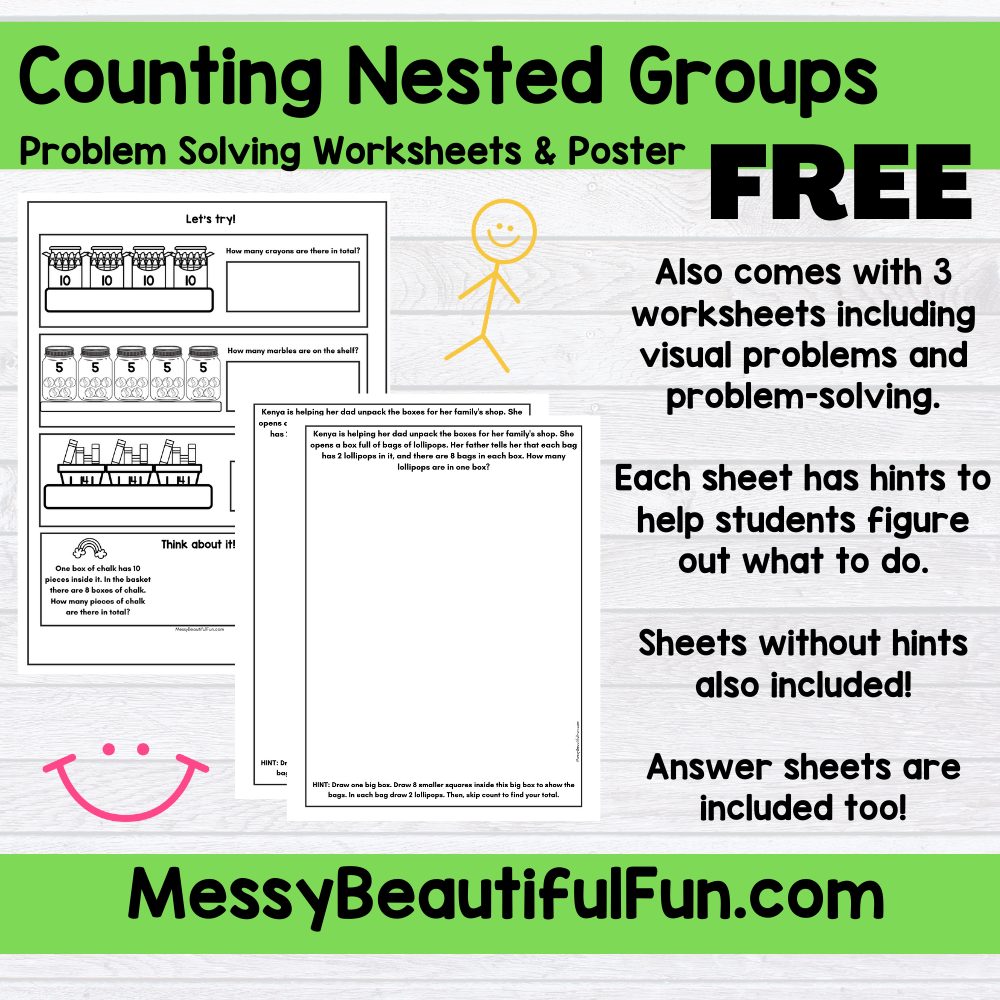
Free Math Curriculum Counting Nested Groups Worksheets

 Counting Nested Groups Free Printable 

Read more about this freebie below, then find the free download link at the bottom of the page!

I'm at the store and trying to figure out how many rolls of toilet paper we will need this month. You know that story! There's 24 rolls in a bag, 48 in the bigger one. If I buy two bags and we use 9 rolls per week.....

We do math like this in real-life all the time. Figuring out amounts, totals, how many 150-gram servings are in that 1kg box. That's why it's so important to include skills like this for kids to practice in their earliest math years - just on their scale of learning.

I made these worksheets for a very specific progression in the Quebec progression of learning, but even if you don't follow that I hope you'll find it useful. "Represents natural numbers in different ways or associates a number with a set of objects or drawings - emphasis on apparent, accessible groupings using objects, drawings, or unstructured materials"


So what does that mean exactly? Well, think about the examples I gave you above - shopping at the grocery store and thinking about how many servings of 150 grams fit into 1.5kg. Now think of that on a second-grader's scale - if I have a big box full of 5 bags and inside those 5 bags are 2 objects each, how many objects do I have? 10!

Teaching The Concept
I would absolutely recommend teaching this with actual objects first. Use whatever you have around the house or classroom - blocks, toys, candies or cereal. Take some small snack baggies from the dollar store so kids can see through them and put an equal number of objects into each bag - start with something simple like 2 in each bag. Show the child(ren) that you are putting two things into each bag and count them as you do, 1 by 1. If child(ren) is familiar with skip counting already, skip count. If not, stick to counting objects one-by-one. Now put all of those bags into a box.
Ask your learner(s) how many objects (cheerios, blocks, etc) are in the box.
See what they say.

Now pull the bags out one by one and cont the objects. If anyone looks confused, be sure to clarify that the bags are not objects - they are holding the objects. The box is not an object we want to count - it's just a container for our bags.
Repeat this exercise with different objects and amounts. 

What's Included


In this freebie unit, I've included a poster and 3 worksheets. 

The poster explains the concept in a simple way. It's a great reminder to keep on the wall after teaching the concept as I outlined above.

The first worksheet is simple questions with some visual representations. This is a great practice to use after you've taught the concept.

The other 2 sheets are a little more of a challenge. Kids need to create their own visuals to help them solve the problem. I've included a hint at the bottom of each page that you can use to help them solve. I have also included those same problems without the hints if you have kiddos ready for the challenge!

An answer sheet is also included to give you a visual.
Grab this freebie below!
**Please remember if you are going to share, share THIS page link, NOT the google drive link. Thank you!**


See my other Situational Math Problems:


Monday, June 13, 2022

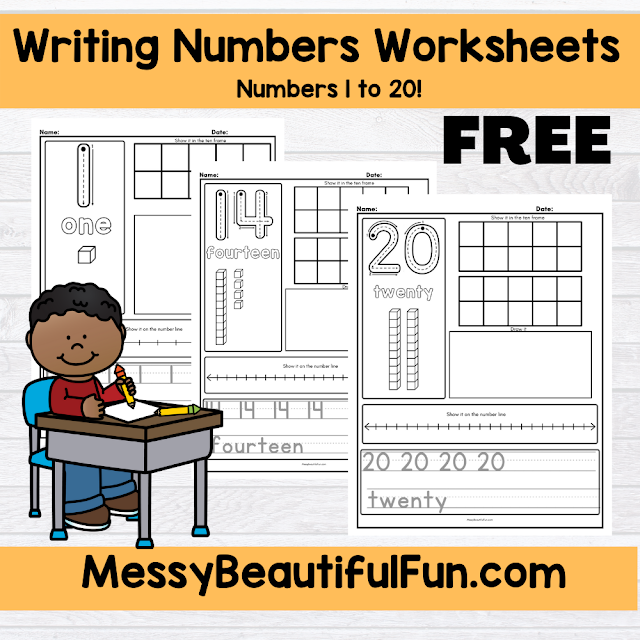
Free Number Writing and Word Worksheets 1 to 20

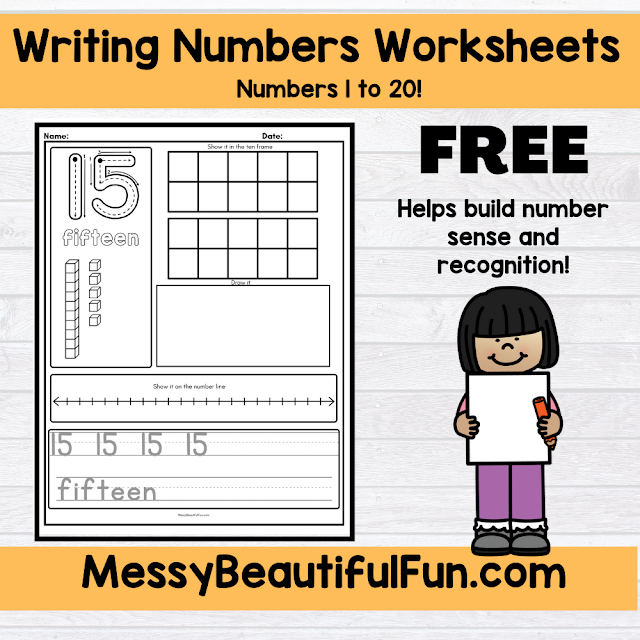
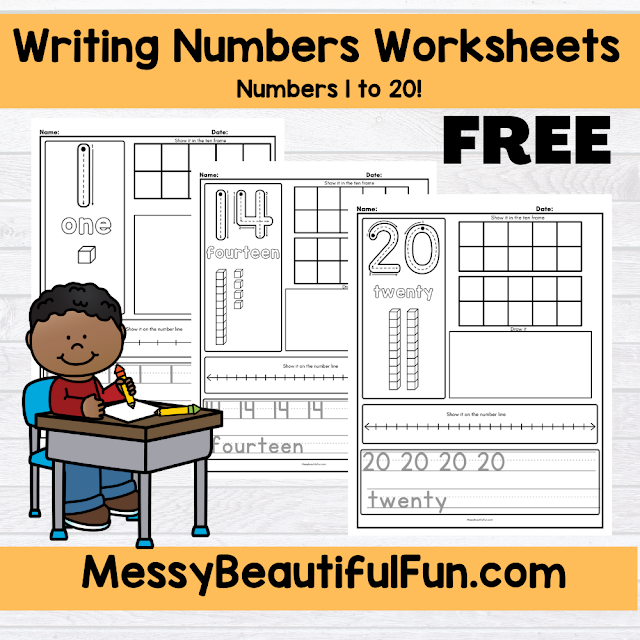
 Free Printable Number Writing Worksheets 1 to 20


I have a new freebie for you today! This is one that I know is soooooo important for early math, but can sometimes be hard to fit into your math schedule. Number writing and number sense!

It can be so tempting to skip making a good solid foundation in number sense. Once kids can count to 100, we often assume they know what numbers truly are - representations of amounts. But so often that concept gets lost on kids. They can count to 20, they can count 20 things - but can they really visualize what 20 looks like? What about 20 on a ten frame or a number line? Practicing these concepts can really help our learners to advance more easily through math concepts in older grades.

These worksheets are a great help in teaching your child or class that concept. After using hands-on manipulatives like place value blocks, legos, big number lines or ten frames, you can have them practice this concept by filling in one of these sheets. 

These sheets include:

  • Writing the number in numeral form
  • Writing the number in word form
  • Showing the amount on a ten-frame or twenty-frame
  • Showing the number on a number line
  • Showing the amount with their own drawing
  • Showing the amount with place value blocks
All in one sheet!

I do hope you and your learners enjoy these sheets, and that they are a help in your classroom or homeschool!
Get this freebie at the link below!
**Just a note that when you are sharing this freebie, please share the link to this page on my blog, not the google drive link! Thank you!**


Get the FREE Number Writing Worksheets Here!


Sunday, June 5, 2022

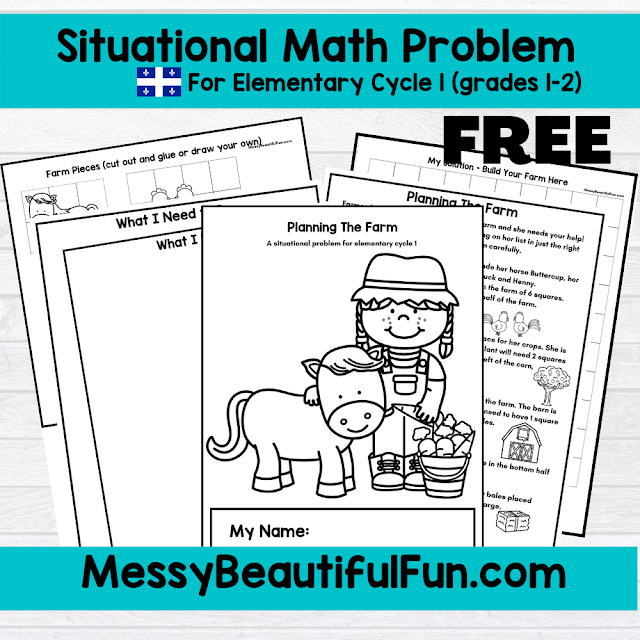
Free Situational Math Problem for Grade 1 or 2

 Free Situational Math Problem (Quebec Education Program-aligned) for Elementary Cycle 1 (grades 1 or 2)


Have you ever heard of a situational math problem? Chances are if you have, you live in Quebec, Canada! A situational problem related to mathematics is basically a large problem for students to solve that uses many different skills they have learned in math. It allows kids to practice deciding which skills are best to use and helps them to sort through lifelike situations.

Although these problems are pretty unique, they can be used by anyone! Not only are they great for practice, but they help students think differently - as opposed to a problem-solving question with just one solid answer. Situational problems, like this one, can have many solutions that are correct. It all depends on if students follow what is asked of them, and figure out a good solution.

I made this freebie because these problems, although a HUGE requirement in our provincial curriculum, are seriously difficult to come by! This would make a great addition to a classroom lesson, especially if you're working on a farm unit! It would also be perfect for homeschoolers looking to add a situational problem to their portfolios! And yes, it includes a sample answer key 😉

Stay tuned for higher grades to come :)

Grab this freebie below the graphic below! All I ask is that you share the link to my BLOG when sharing this freebie, NOT the google drive! Thank You so much!


GRAB THIS FREE SITUATIONAL PROBLEM HERE

Skip Counting Collections - Free Math Curriculum Units


Skip Counting Collections Printable Worksheets / Cards


Skip counting pre-grouped objects is an important skill for kids to master, but oftentimes grouping and counting things by themselves is not taught. This is a super important progression though, and a great way for kids to sharpen their visual math skills!


Take a look at the card in the picture above. It shows a bunch of peppers spread out all over the page and asks kids to circle them in groups of ten, then skip count to find how many there are in total. Although this may look different than the skip counting sheets you're used to seeing, it's actually a super important aspect of the progression of learning in mathematics. 


Having your learner's group things on their own teaches them to visually discriminate and estimate how many things may be in a group. It is also a great way to teach them the value of skip counting - how it may help them in their daily lives.

These sheets could function on their own as worksheets or could be cut out and pasted into a math journal. They all feature cute clipart that most skids love to colour too!

I made these sheets to help fulfill the Quebec Progression of Learning for my own kids which says students should be able to count collections of objects by grouping them. It is something I am using with my own daughter in second grade now, and I hope you find it useful in your classroom or homeschool too!

Grab this freebie below!


Get the FREE Counting Collections Unit HERE